FIFO vs FEFO: what is the difference?
BlogAt a glance
FIFO uses the oldest lot first; FEFO uses the lot that expires first, whenever it arrived.
Talk to us about stock allocationWatch the stock allocation demo
Pick list
Lot A
ReceivedMar 3
ExpiresSep 30
Pick first
Lot B
ReceivedMar 10
ExpiresJun 15
Pick first
Lot C
ReceivedMar 17
ExpiresAug 20
Pick first
Sorted by expiry date: Lot B goes first
Sorted by date received: Lot A goes first
Switch the rule to re-sort the same three lots.
FIFO
First in, first out
FIFO uses the oldest stock first, by the date each lot was received or made.
FEFO
First expired, first out
FEFO uses the stock with the earliest expiry date first, whenever it arrived.
Where they split
When every lot of an item has the same shelf life, the two rules pick the same lot. They split when a newer lot expires before an older one. Manufacturers with dated materials or products use FEFO for those items; for stock that does not expire, FIFO is usually enough.
FIFO and FEFO in simple terms
Both are stock rotation rules. They decide which lot of an item leaves the shelf next, for a customer order or for an issue to production.
FIFO
First in, first out
The lot that was received or produced earliest is allocated and picked first.
FEFO
First expired, first out
Also written first expiry or first expiration, first out. The lot with the earliest expiry, use-by or best-before date is allocated and picked first.
Lot
Some systems call it a batch
A quantity of one item made or received together. It shares one lot number and, for dated goods, one expiry date.
Stock allocation
Which lot, which location
Reserving specific stock, down to the lot and the location, for an order line before it is picked. The rotation rule decides which lot.
FIFO in accounting
FIFO is also the name of an inventory costing method. This page is about physical rotation, which lot leaves the shelf. How stock is valued in the accounts is a separate setting in your ERP and does not have to match.
What is the difference between FIFO and FEFO?
FIFO sorts lots by when they came in. FEFO sorts them by when they go out of date.
Shelf lives differ more often than you might expect: lots from two suppliers, two production runs, or material that sat at a supplier before it shipped can arrive in one order and expire in another. Under FIFO, a short-dated lot that arrived second waits behind an older lot with more life left, and can expire on the shelf.
The same three lots, two rules
Lot B arrived after Lot A but expires first. FIFO ships Lot A first; FEFO ships Lot B first.
EXP SEP 30
Lot A
ReceivedMar 3
ExpiresSep 30
FEFO picks first
EXP JUN 15
Lot B
ReceivedMar 10
ExpiresJun 15
EXP AUG 20
Lot C
ReceivedMar 17
ExpiresAug 20
|
FIFO Earliest received first |
FEFO Earliest expiry first |
|
|---|---|---|
| Sorts lots by | Date received or produced | Expiry or best-before date |
| Data it needs | A receipt or production date for each lot | An expiry date for each lot, recorded at receipt or when the lot is made |
| Suits | Stock that does not expire, or where every lot has the same shelf life | Dated stock where lots can have different shelf lives |
| What goes wrong without it | Old stock ages on the shelf until it is obsolete | A short-dated lot expires behind a newer one and is written off |
When should a manufacturer use FEFO?
Use FEFO for any item that carries an expiry, use-by or best-before date and whose lots can differ in shelf life. Typical cases:
Use FEFO for
-
Ingredients and finished goods with a dated shelf life.
-
Chemicals, coatings and adhesives
Products with a shelf life counted from the date of manufacture.
-
Pharmaceutical, medical and personal care products
Items sold and used by expiry date.
-
Raw materials issued to production
An expired lot on the line can mean a rejected batch, so FEFO applies to issues to the line as well as to customer shipments.
-
Customers with shelf-life terms
Some customers set a minimum remaining shelf life on what they receive, so fresher lots go to them and older lots go to customers who will take them.
FIFO is usually enough for
Stock that does not expire, such as metal parts and fasteners.
FIFO still keeps older stock from aging into obsolescence.
Many sites run both
FEFO for dated items and FIFO for the rest, set item by item.
Rotation rule, set item by item
Dated items
FEFO
Stock that does not expire
FIFO
What FEFO needs to work
FEFO is only as good as the expiry dates behind it. Four things have to be in place:
-
Lot control
Every receipt and every production run gets a lot number, and the expiry date stays with that lot from then on.
-
Labels a scanner can read
The lot number goes on the label, so a scan identifies the lot and nobody keys it in by hand.
-
Allocation by expiry date
The system that reserves stock for orders sorts lots by expiry, so the pick list already names the right lot.
-
A lot check at the pick
The picker scans the lot, and a scan of the wrong lot is stopped before it ships.
Then add rules for stock near or past its date
- On holdA hold so expired lots cannot be allocated.
- Expiring soonA regular list of lots that will expire soon, so they are used first or sold on.
- Counted by lotCounting by lot keeps the dates in the record matching the shelf; see what is cycle counting.
Expiry watch
Lot D Expired
On hold
Lot B Jun 15
Expiring soon
Lot C Aug 20
Counted by lot
How stock allocation applies FIFO and FEFO
Stock allocation is where the rule meets an order. When an order line is released, the warehouse system looks at every lot and location holding free stock of the item, sorts them by the rule and reserves enough to fill the line. The picker is then sent to those locations for those lots.
FIFO or FEFO
decides which lot.
Other strategies
decide which location to take it from, for example filling the line with the fewest picks, or emptying part-full bins first to free space for receiving.
With FEFO the right lot is often not the nearest one, so the pick list should name it.
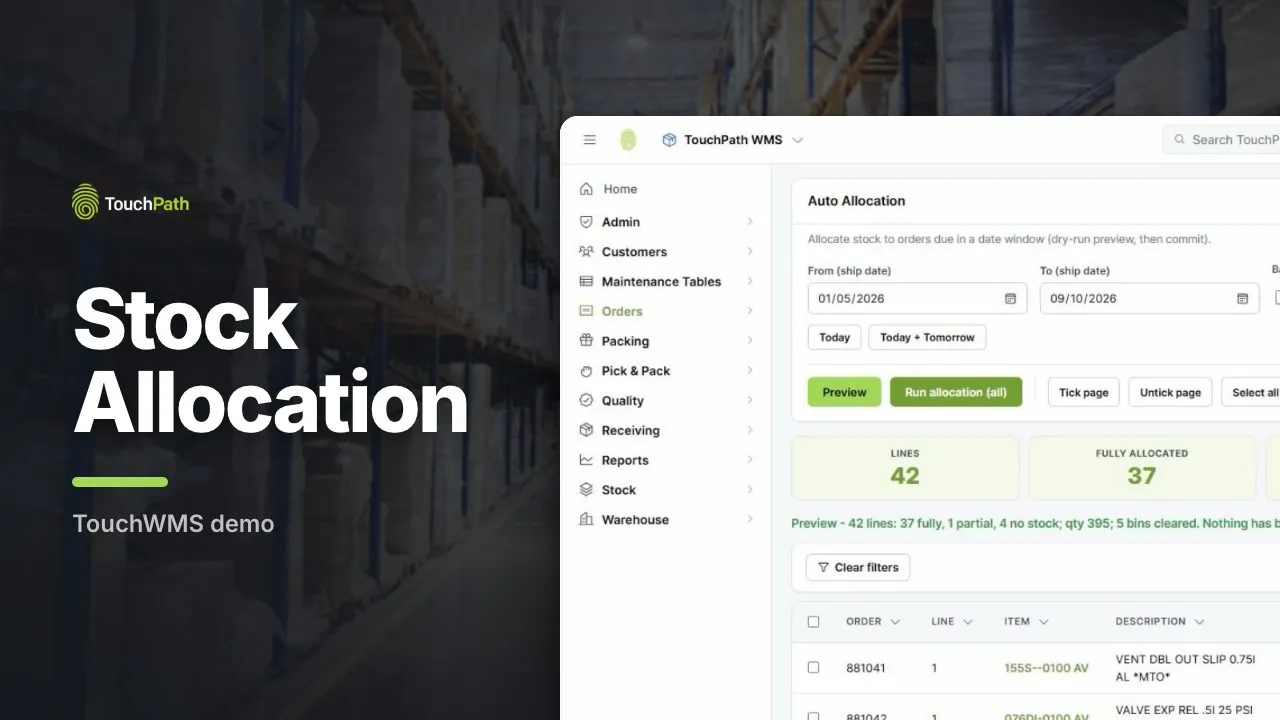 Demo videoSee stock allocation on screenWatch the demo →
A narrated walk-through of stock allocation in TouchWMS.
FEFO at a global beverage manufacturer

BPCSTouchInventoryiServ AdapterFEFO picking
Among the business benefitsReduced inventory shrinkage due to obsolescence
With this technology, we not only capture inventory in real-time, but validate on the RF devices and track inventory movements as they occur by the plant and warehouse employees.
Operations Manager, global beverage manufacturer
A global beverage manufacturer that was implementing BPCS needed lot traceability and FEFO picking for customer shipments, to reduce obsolete inventory. TouchPath delivered a customized TouchInventory solution with the iServ Adapter, and customer picking ran first expiration, first out.
FIFO and FEFO with TouchPath
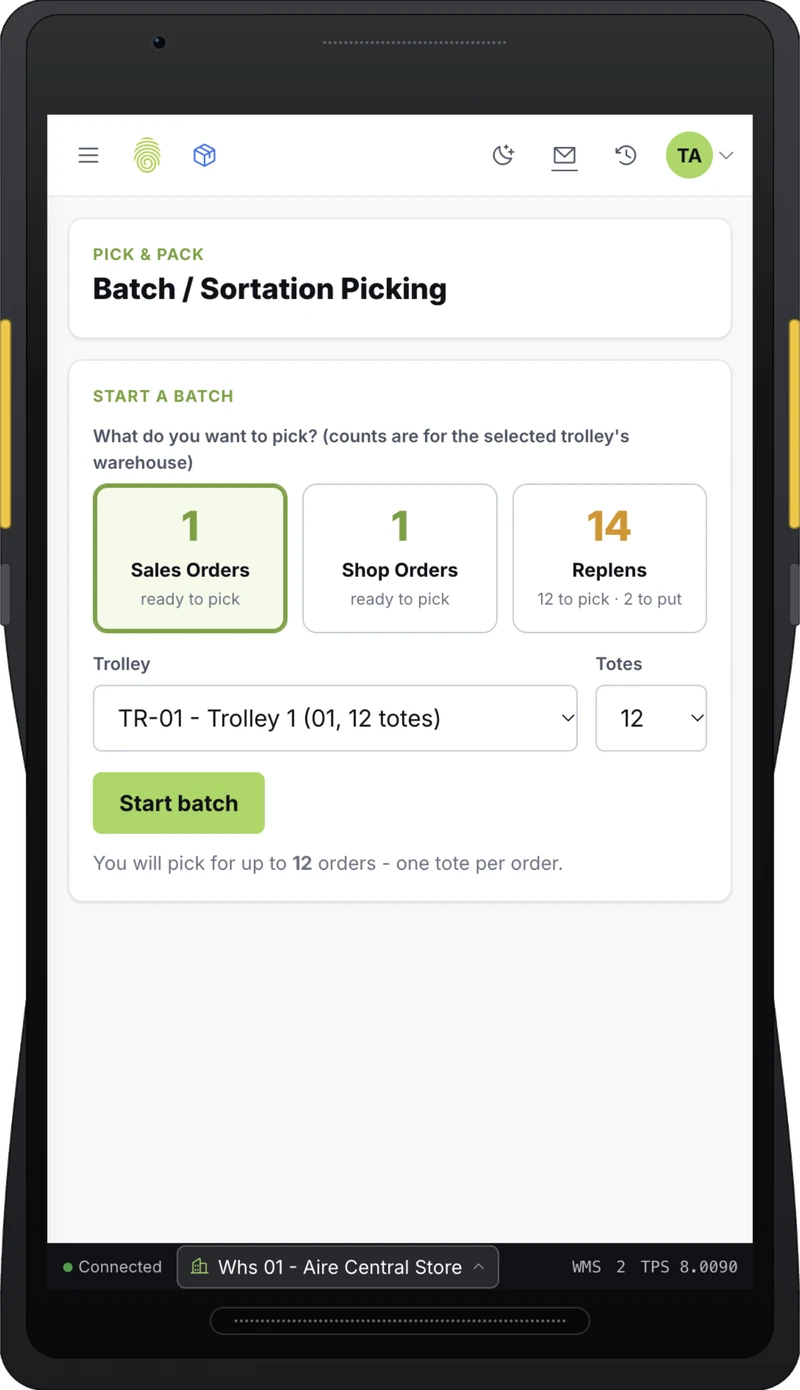
In TouchWMS, stock is allocated FIFO, FEFO or by optimized picks, with lot control. Pick Process, Work Order Pick and Batch Picking share one lot check, and items can be reserved for customers from a specific location or batch.
FIFOFEFOOptimized picksLot control
Product
TouchWMS
Warehouse management with FIFO, FEFO or optimized picks, and lot control.
See TouchWMS
Case study
Real-time inventory flowed into BPCS for a global beverage manufacturer
Lot traceability and first-expiry picking.
Read the case study
Related guides: lot traceability, barcode data collection and inventory management for food and beverage.
Want the right lot on every pick? Tell us how you allocate stock today.
Tell us which ERP you run and how lots and expiry dates are handled today, and we will walk you through how it would work.
Back to News