What is lot traceability?
BlogLot traceability is the ability to follow each lot, or batch, of material from the supplier that sent it, through the production orders that used it, to the customers who received the finished goods.
Talk to us about lot controlRead the lot recall case study
Lot trace
Supplier lot
Lot ASupplier 1
Production orders
Order 1Order 2
Finished lots
Lot F1Lot F2
Customers
1234Customer 4 is not affected
A recall of Lot A reaches customers 1, 2 and 3
Switch direction to follow the same lot both ways.
Backward
Where did this lot come from?
Which supplier lots went into it? A backward trace often starts from a customer complaint.
Forward
Where did this lot go?
Which finished goods and customers did it reach? A forward trace often starts from a supplier warning.
When a problem turns up
A trace shows what is affected: the supplier lots behind a finished product, and the finished lots and customers a material reached.
What lot traceability means
A lot, or batch, is a quantity of material made or received together under the same conditions. It gets a lot number, which goes on the label and into the records. Lot traceability links those numbers from step to step, so one lot number leads to the receipts, moves, production orders and shipments it was part of.
Two more terms come up further down: a serial number is an identifier for a single unit, used where each unit has to be followed on its own, and a mock recall is a practice trace on a chosen lot, timed, to test whether the records hold up.
Lot or batch number
On the label and in the records
The identifier for one lot. The two words are often used interchangeably; some plants say batch for what they make and lot for what they buy.
Supplier lot
Recorded at receiving
The supplier’s own lot number, recorded at receiving next to yours, so a trace can reach back to the supplier.
Genealogy
Some systems call it a where-used record
The parent and child record of which lots went into which.
Lot control
The day-to-day discipline
Recording the lot at each step, keeping lots apart where they have to stay apart, and holding a lot when there is a question about it.
How a lot trace works
A backward trace starts from a finished product and works back to the raw material lots and the suppliers behind them. A forward trace starts from a raw material lot and works forward to the finished lots and customers it reached.
Each step only has to record the step before it and the step after it, often called one step back and one step forward. Linked together, those records give the whole chain.
Trace a lot
Select a lot, an order or a customer. The board follows it back to its suppliers and forward to its customers.
Supplier lots
Production orders
Finished lots
Customers
Lot A went into orders 1 and 2, which made lots F1 and F2. A recall of Lot A reaches customers 1, 2 and 3. Customer 4 is not affected.
Why lot traceability matters
The value of a trace is in its scope. With complete records, a recall can be limited to the lots involved. With gaps in the records, a company may have to widen it to everything made on the same line in the same period.
Smaller recalls
A precise trace limits a recall to the affected lots, instead of a date range or a whole product line.
Only the affected lots, F1 and F2, are recalled.
Faster answers
When a customer or supplier reports a problem, the team can name the affected lots, orders and customers quickly.
Quality investigations
A backward trace shows which supplier lots, lines and shifts a bad batch has in common.
Shelf life
Lot records carry dates, so stock can be picked first expired, first out (FEFO) and expired lots can be held. See the stock allocation demo.
Customer and audit requests
Customers, auditors and regulators in food, beverage and other regulated industries often ask manufacturers to show their trace records.
What to record at each step
A trace is only as good as the records behind it. These are the steps where a lot is most often lost:
-
Receiving
Supplier, supplier lot, your lot number, quantity, date and the location it was put away to.
-
Storage and moves
Each move to a new location or pallet, and who made it.
-
Mixing
Which lots went into a shared bin, tank or silo, so material from a mixed lot can still be traced.
-
Production
Which lots were used on which production order, in what quantity, and the lot number of what was made.
-
Labeling
The lot number on each case and pallet label, printed from the record instead of written by hand.
-
Shipping
Which lots and pallets went on which order, to which customer, on which date.
Scan the lot
Scanning the lot barcode at each step records the lot as the move happens, and it cuts the transcription errors that come with writing numbers down and keying them in later. When those scans reach the ERP as they happen, the trace is current at any hour. For the wider picture of stock on the plant floor, see manufacturing inventory management.
How to run a mock recall
A mock recall is a practice run. Pick a lot, trace it both ways and time how long it takes to account for all of it. Use a raw material one time and a finished product the next.
Many companies set a time target for the exercise and repeat it on a schedule, so a real recall follows a routine people have already practiced.
Mock recall run
Shipped lot
Lot chosen
Lot A
Clock
Started
Backward
Supplier 1
Forward
Customers 1, 2, 3
Quantities
Reconciled
Write-up
Gaps to fix
Then repeat with a different lot
-
Choose a lot without warning. Pick one that has already shipped, so the trace has to reach customers.
-
Start the clock. Note who started the exercise and when.
-
Trace backward. Find the supplier, the supplier lot and the receipt.
-
Trace forward. Find the production orders that used the lot, the finished lots made from it and the customers who received them.
-
Reconcile the quantities. What was received should match what was used, scrapped, shipped and still on hand. A gap points to a missing record.
-
Stop the clock and write it up. Record how long it took, where the trail went cold and which records had to be found by hand. Fix those, then repeat with a different lot.
Lot tracking and serial tracking
Serial tracking follows each unit instead of each lot. It suits items followed one by one through their life, such as equipment, devices or assemblies that are serviced later. Lot tracking suits material made or bought in quantity, such as ingredients, chemicals, packaging and finished goods sold by the case.
Some plants use both: lot numbers for components and serial numbers for the finished unit.
|
Lot tracking One number for a quantity |
Serial tracking One number for each unit |
|
|---|---|---|
| What gets a number | A quantity made or received together | One unit |
| Typical items | Ingredients, chemicals, packaging, cased goods | Equipment, devices, assemblies |
| A recall covers | The units in the lot | The listed units |
| On the label | One lot number per case or pallet | A unique number per unit |
Lot recall at a food manufacturer
TouchInventoryPallet-level historyMixed lots traced
The resultLot recall went from hours to minutes
We’ve taken our lot recall process from hours to minutes by accurately tracking our inventory.
Controller, food manufacturer
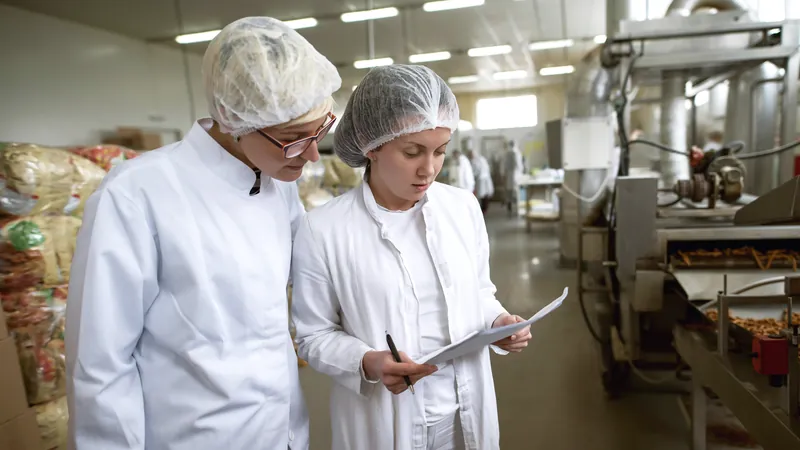
A food manufacturer that produces coatings, marinades, specialty mixes and seasonings needed lot control from the purchase point, through shop order creation, to shipment to the customer. Lots of material were mixed during production, and the mixed lots had to be traced to the finished goods so that a lot recall could be systematic. With TouchInventory, the plant recorded inventory at the pallet level and kept a complete history of each pallet: each time it was modified, moved or consumed, by whom and when.
Also
A global beverage manufacturer running BPCS used TouchInventory and the iServ Adapter for lot traceability and FEFO picking. Read the beverage case study.
Lot traceability with TouchPath
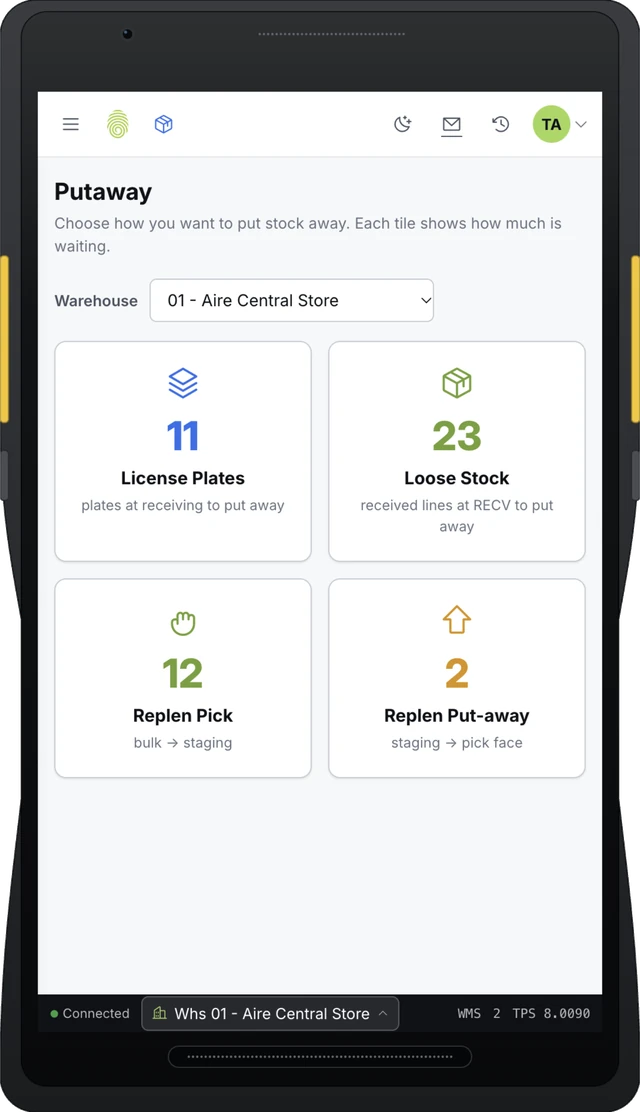
TouchWMS keeps serial and batch numbers, with traceability by lot, location and pallet, and records all warehouse activities in log files for a complete audit trail.
On the manufacturing side, TouchInventory tracks raw materials, work in process and finished goods on the floor and posts them to the ERP.
Serial and batch numbersLot, location, palletAudit trail
Product
TouchWMS
Warehouse management with serial and batch numbers, traceable by lot, location and pallet.
See TouchWMS
Product
TouchInventory
Manufacturing inventory, from raw materials to finished goods, posted to the ERP.
See TouchInventory
Case study
Lot recall went from hours to minutes for a food manufacturer
Lots traced from purchase to shipment, including lots mixed during production.
Read the case study
Related guides: FIFO vs FEFO, barcode data collection and inventory management for food and beverage.
Could you trace a lot in minutes? Tell us how you record lots today.
Tell us which ERP you run and how lots are recorded on your floor, and we will walk you through how it would work.
Back to News